
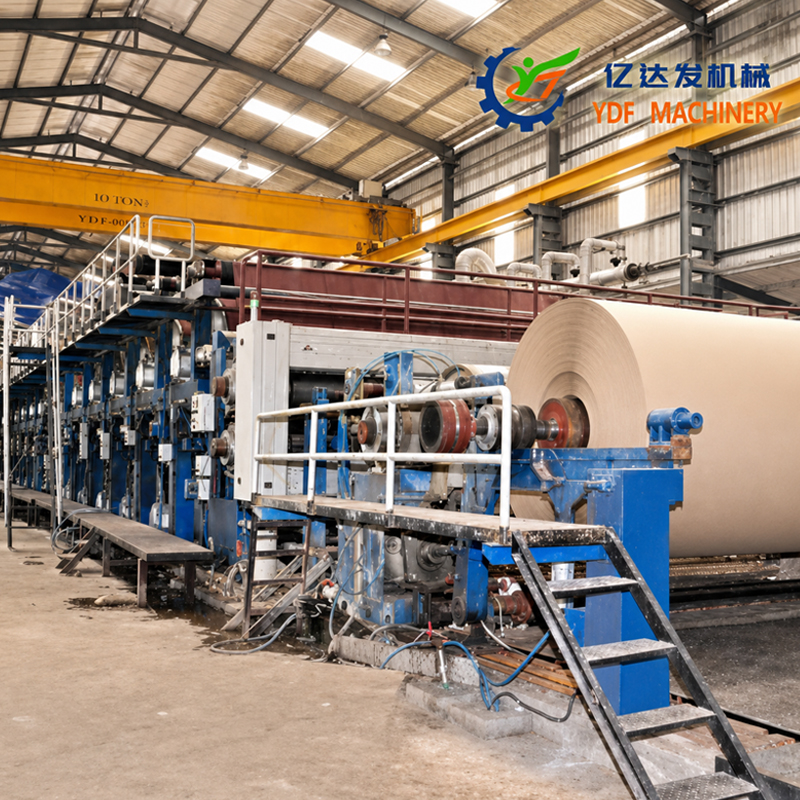
Industrial Waste Paper Recycling & Kraft Paper Making Machine technology is becoming an increasingly important solution for paper manufacturers looking to transform recovered fiber into practical packaging materials. By combining waste paper recycling, advanced pulp preparation and efficient paper forming technology, modern production lines can convert used paper and cardboard into kraft paper suitable for corrugated packaging, paper bags, wrapping materials and other industrial applications.
As manufacturers face growing demand for recyclable packaging, the ability to efficiently process recovered paper is becoming an important part of modern paper mill development. Recycling systems can collect, process and remanufacture recovered materials into new products, creating a continuous material cycle rather than sending valuable fiber directly to disposal.
Industrial waste paper is not simply a disposal problem. It can also be an important secondary fiber resource for paper production.
Depending on the raw material source, a waste paper recycling system may process materials such as:
Old corrugated containers (OCC)
Used cardboard
Kraft paper waste
Packaging paper
Corrugated box cuttings
Mixed recovered paper
Printing and converting waste
Other suitable recycled fiber materials
The objective of the recycling process is to separate usable fibers from contaminants and prepare a stable pulp suitable for the paper machine.
This approach supports a circular production model in which recovered paper is collected, processed and transformed into new paper products. The U.S. EPA describes recycling as a process involving collection, processing and remanufacturing, with recovered materials ultimately becoming new products.
A complete waste paper recycling kraft paper production line normally consists of several interconnected sections. The exact configuration can be customized according to raw material quality, production capacity, paper grade and finished paper specifications.
Baled or loose waste paper is first introduced into the raw material preparation section. Large contaminants and unsuitable materials can be removed before the paper enters the pulping process.
Good raw material preparation helps stabilize the downstream recycling system and improves fiber recovery.
The prepared waste paper enters a hydrapulper, where water and mechanical agitation separate the paper structure and release individual fibers.
This stage is particularly important because different recovered paper grades have different fiber bonding characteristics. The pulping system therefore needs to provide sufficient disintegration while avoiding unnecessary fiber damage.
After pulping, the recycled pulp passes through screening and cleaning equipment.
The purpose is to remove unwanted materials such as:
Plastics
Staples
Tape
Sand
Heavy particles
Fiber bundles
Other contaminants
Efficient screening is essential for maintaining pulp quality and protecting the equipment installed further downstream.
The cleaned recycled pulp can then be refined and adjusted according to the target kraft paper grade.
Refining influences fiber bonding and paper strength. Depending on the final application, the stock preparation system may also include pulp mixing, chemical addition, dilution and consistency control.
The prepared pulp is delivered to the paper machine, where it is distributed across the forming section to create a continuous paper web.
The press section removes additional water and improves sheet consolidation. Proper control of drainage, pressing and web formation helps create a more uniform paper structure.
The paper web then enters the drying section, where moisture is reduced to the required level.
After drying, the kraft paper can be calendered, reeled and finished according to customer requirements. Depending on the final application, additional converting equipment may be integrated into the production line.
Kraft paper is widely associated with packaging because of its strength, flexibility and suitability for converting processes.
Recycled kraft paper can be used in applications such as:
Corrugated board production
Carton and box manufacturing
Paper bags
Wrapping paper
Industrial packaging
Protective packaging materials
Paper-based shipping products
The growth of paper-based packaging has increased interest in production technologies capable of using recovered fiber efficiently.
The EPA notes that recovered paper can be used to manufacture new paper products and that recycling can conserve natural resources while reducing the amount of material sent for disposal.
One of the most important considerations when designing an industrial waste paper recycling machine is that not all waste paper behaves in the same way.
OCC, mixed office paper, kraft waste and other recovered paper grades may differ in fiber length, moisture content, contamination level and previous processing history.
For this reason, an efficient production line should not simply maximize equipment capacity. It should be designed around the actual characteristics of the raw material.
Important engineering parameters may include:
Raw material characteristics:
The composition and contamination level of recovered paper directly affect the recycling process.
Production capacity:
The pulp preparation system, paper machine and finishing equipment should be properly matched to the required output.
Paper basis weight:
Different kraft paper products require different forming, pressing and drying conditions.
Finished roll width:
The paper machine configuration should correspond to the required finished paper dimensions.
Fiber quality:
Refining and stock preparation need to balance paper strength with fiber preservation.
Energy and water management:
Modern mills increasingly focus on reducing unnecessary water circulation, energy consumption and production losses.
The value of a modern kraft paper recycling system is not limited to recycling waste paper. The larger opportunity is to create a stable production chain from recovered fiber to finished packaging paper.
A well-designed system can integrate:
Waste Paper → Pulping → Screening → Cleaning → Refining → Stock Preparation → Paper Forming → Pressing → Drying → Calendering → Reeling → Kraft Paper
This integrated approach allows manufacturers to control the production process from raw material preparation through final paper formation.
Rather than treating recycling as an isolated process, modern paper mills can view recovered fiber as an important raw material within the overall manufacturing system.
A properly configured production line can provide several practical advantages:
The system allows suitable waste paper to be converted into reusable papermaking fiber instead of being discarded.
Different recovered paper grades can potentially be processed when the recycling system is configured appropriately for the required raw material.
Pulp preparation and paper production can be connected into one continuous manufacturing process.
The finished kraft paper can serve a wide range of downstream packaging applications.
Recycling recovered paper helps extend the useful life of existing fiber resources. EPA materials also identify conservation of natural resources and reduction of waste as potential benefits of recycling.
The configuration of a kraft paper machine can be adjusted according to production capacity, raw material, paper width, basis weight and final product requirements.
The future of paper manufacturing is not simply about producing more paper. It is about using raw materials more efficiently while maintaining consistent product quality.
For paper manufacturers, an Industrial Waste Paper Recycling & Kraft Paper Making Machine provides a pathway for connecting recovered materials with the growing packaging paper market.
From the initial sorting of waste paper to final kraft paper reeling, every stage influences the performance and economics of the production line. A successful project therefore requires more than individual machines—it requires a properly engineered system in which pulping, cleaning, refining, stock preparation, paper forming and drying work together.
As the circular economy continues to influence the packaging industry, recovered fiber will remain an important resource for paper manufacturers. Advanced waste paper recycling technology can help transform discarded paper into valuable packaging materials while creating a more integrated and resource-conscious production model.
The Industrial Waste Paper Recycling & Kraft Paper Making Machine represents more than a traditional paper production solution. It combines recycling technology with modern paper manufacturing to create a complete route from recovered paper to finished kraft paper.
For investors and paper producers planning a new recycling paper mill, upgrading an existing facility or expanding into recycled packaging paper, selecting the right recycling system and paper machine configuration is critical.
A customized production line based on raw material quality, capacity, paper specifications and end-use requirements can provide a practical foundation for producing competitive recycled kraft paper for today's packaging market.

