
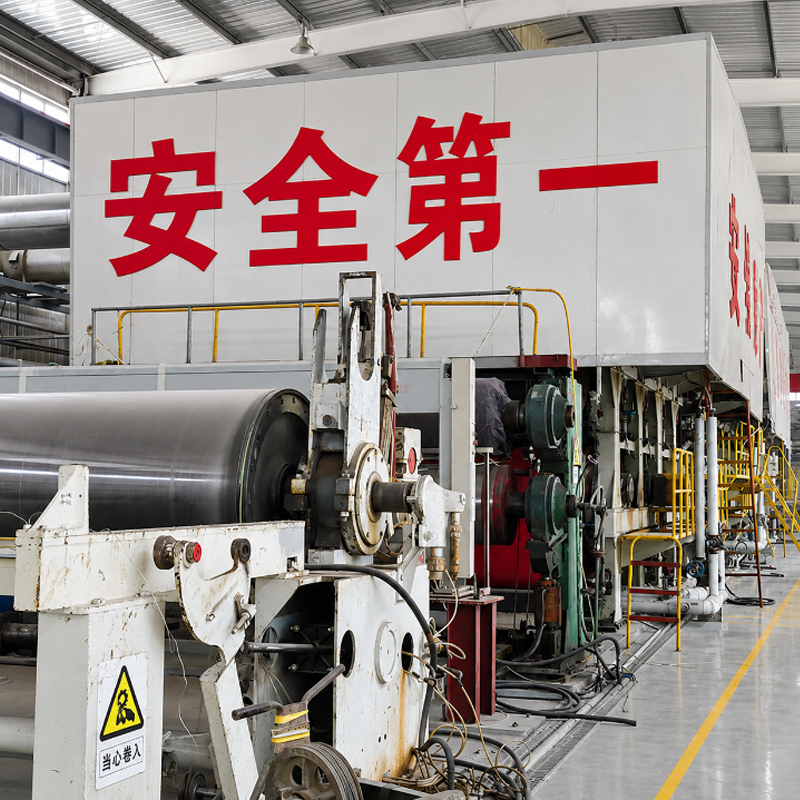
As demand for high-quality printing paper, writing paper, office paper, and other cultural paper products continues to evolve, paper manufacturers are increasingly focusing on production efficiency, stable paper quality, and sustainable resource utilization. The Wood Raw Materials Pulp System Culture Paper Production Line offers an integrated solution for converting wood-based raw materials into pulp and manufacturing high-quality cultural paper for commercial and industrial applications.
Wood is an important raw material for cultural paper production because its fibers can be processed to meet different paper strength, smoothness, brightness, and printability requirements. Depending on the desired product specifications, manufacturers may use hardwood pulp, softwood pulp, or a suitable blend of different pulp grades.
A complete wood pulp processing system typically includes raw material preparation, pulping, pulp screening, cleaning, refining, and stock preparation. These processes help remove unwanted impurities, improve fiber properties, and create a consistent pulp mixture for the paper machine.
Proper pulp preparation is essential for producing uniform paper with reliable strength, surface quality, and performance during printing and writing.
A modern wood raw materials pulp system culture paper production line combines pulp preparation equipment with a paper machine and auxiliary systems. The configuration can be customized according to production capacity, paper grade, finished paper width, basis weight, and available factory space.
The main equipment may include:
Wood Raw Material Preparation System: Prepares suitable wood materials or purchased wood chips for subsequent processing.
Pulping System: Separates fibers using an appropriate pulping process selected for the raw material and product requirements.
Screening and Cleaning Equipment: Removes contaminants and helps maintain consistent pulp quality.
Pulp Refining System: Adjusts fiber properties to support the required paper strength and formation.
Approach Flow and Stock Preparation System: Mixes pulp with process water and distributes the prepared stock to the paper machine.
Culture Paper Making Machine: Forms, dewaters, presses, and dries the paper web before finishing.
Calendering and Rewinding Equipment: Improves surface characteristics and prepares paper rolls for downstream converting or customer delivery.
The final equipment selection depends on whether the project focuses on printing paper, writing paper, copy paper, or other cultural paper grades.
The production process generally begins with raw material preparation and pulp production. After screening and cleaning, the pulp is refined and blended to achieve the required fiber characteristics. The prepared stock is then delivered to the paper machine, where it is formed into a continuous wet paper web.
The paper web passes through dewatering, pressing, and drying stages. Depending on the machine design and target paper grade, additional calendering and finishing processes may be used to achieve the desired thickness, smoothness, and appearance.
Effective process control is important throughout production. Operators should monitor pulp consistency, fiber quality, drainage performance, paper basis weight, moisture content, and machine operating conditions. Proper coordination between the pulp system and paper machine can help reduce quality variations, minimize unnecessary material losses, and improve production stability.
Energy and water consumption are important considerations when planning a culture paper manufacturing project. An appropriately designed production line can incorporate process-water circulation, heat recovery where practical, optimized refining, and efficient drive systems to support better resource utilization.
Automation and variable frequency drives may also help operators adjust equipment operation to actual production requirements. However, the achievable energy savings depend on raw materials, machine configuration, operating conditions, and the efficiency of the original equipment.
Responsible sourcing of wood, appropriate wastewater treatment, and compliance with local environmental regulations are also essential components of a modern paper manufacturing operation.
Every paper mill has different investment objectives, raw material availability, and market demands. Therefore, selecting a wood pulp system culture paper production line requires a comprehensive evaluation of the intended paper grade, production capacity, finished paper specifications, utility requirements, and factory layout.
A properly matched production line can help manufacturers establish a consistent manufacturing process, improve operational coordination, and respond more effectively to changing customer requirements.
Before purchasing equipment, investors should evaluate the complete project configuration, including pulp preparation, paper machine performance, finishing equipment, electrical control, installation, commissioning, and operator training.
For businesses planning to enter or expand the cultural paper market, an integrated wood raw materials pulp system provides a practical starting point for developing a production facility tailored to specific product and market requirements.
It is an integrated manufacturing system that processes suitable wood-based raw materials into pulp and converts the prepared pulp into cultural paper products such as printing paper, writing paper, and copy paper.
Depending on the selected pulping process, the system may use wood chips or other suitable wood-based feedstocks. Alternatively, mills may purchase prepared wood pulp for use in the stock preparation and paper-making stages.
Depending on equipment configuration and pulp characteristics, the line can be designed for printing paper, writing paper, copy paper, and other cultural paper grades. Specific product requirements should be confirmed before equipment selection.
A typical configuration includes raw material preparation or pulp feeding equipment, pulping equipment where required, screening and cleaning systems, refining equipment, stock preparation, a paper machine, drying and finishing equipment, and relevant electrical and auxiliary systems.
Manufacturers can improve efficiency through suitable pulp preparation, optimized refining, stable process control, preventive maintenance, effective water management, and coordination between the pulp system and paper machine.
Yes. The production line can be configured according to target paper grades, production capacity, paper width, basis weight, raw material conditions, and available factory space. Final specifications should be confirmed through project evaluation.
Major factors include production capacity, paper machine width and speed, pulp processing requirements, automation level, auxiliary equipment, energy systems, installation, and local infrastructure. A project-specific quotation is recommended for an accurate estimate.
Buyers should provide the intended paper grade, target daily or annual output, finished paper width, basis weight range, available raw materials, factory dimensions, and local electricity and water conditions. These details help suppliers recommend an appropriate configuration.
The wood raw materials pulp system culture paper production line integrates fiber preparation, pulp treatment, paper formation, drying, and finishing into a coordinated manufacturing solution. With suitable equipment selection and effective process management, paper manufacturers can work toward consistent product quality, reliable production performance, and improved resource utilization.
Businesses evaluating a new culture paper mill should assess their raw materials, target markets, production objectives, and environmental requirements before finalizing the equipment configuration. A customized production solution can provide a foundation for long-term development in the printing and writing paper industry.

