
As global demand for sustainable hygiene products surges, understanding the investment landscape for bamboo-based tissue production becomes critical for manufacturers and investors alike.
The bamboo fiber tissue paper manufacturing sector is experiencing unprecedented growth, driven by escalating environmental concerns, regulatory pressures on deforestation-linked materials, and shifting consumer preferences toward eco-friendly alternatives-1. For industry stakeholders evaluating entry into this market, a comprehensive understanding of plant setup costs, operational expenses, and emerging investment trends is essential.
The global bamboo pulp market is on a robust growth trajectory. Valued at approximately USD 3.8 billion in 2026, the market is projected to reach USD 11.02 billion by 2035, expanding at a compound annual growth rate (CAGR) of 12.55%-5. Asia-Pacific dominates this landscape with an approximate 60% market share, followed by Europe at 20% and North America at 15%-5.
Sustainability initiatives are the primary catalyst. The increasing demand for eco-friendly products drives 65% of market growth, while growing awareness of sustainable fibers accounts for 40%-5. Bamboo’s remarkable growth characteristics—capable of growing up to three feet per day and requiring 30% less water than traditional hardwood trees to yield the same tonnage of pulp—position it as an ideal renewable feedstock for tissue manufacturing-45.
Setting up a bamboo fiber tissue paper manufacturing plant involves multiple cost components. According to industry analysis, the operating cost structure is primarily driven by raw material consumption, with bamboo accounting for approximately 50-60% of total operating expenses. Utilities follow at 20-25% of OpEx-11.
Key cost factors include:
Raw Material Costs: Bamboo fiber, while a sustainable resource, may require specialized treatment for papermaking, potentially making it more expensive than traditional wood pulp in the short term. However, bamboo’s rapid renewability offers cost benefits over the long run-28.
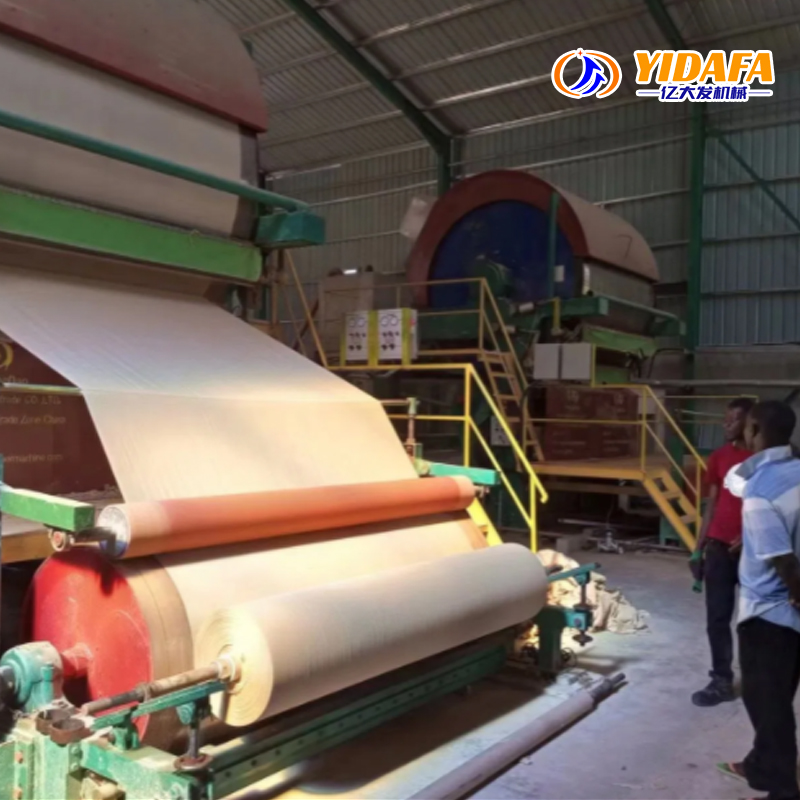
Production Equipment: A fully automated toilet paper roll production line typically ranges from USD 120,000 to 300,000 for converting equipment-28. For complete production lines, a 10-ton-per-day bamboo tissue paper production line is approximately USD 650,000, representing the smallest commercially viable scale in bamboo pulp making-28.
Energy and Operating Costs: Modern bamboo processing equipment incorporates energy-saving technologies. Advanced systems utilizing low-temperature drying can reduce energy consumption by approximately 20% compared to conventional thermal drying methods-45.
Technology and Machinery: The level of automation and production capacity (tons per day) are primary determinants of equipment pricing. Fully automated lines range from USD 60,000 to over 500,000, while industrial paper mill turnkey plants can reach USD 1.5 million to USD 10 million+ for 15–100+ tons per day-21.
For comprehensive equipment solutions tailored to bamboo fiber processing, manufacturers can explore specialized machinery providers such as Yidafa Paper Machinery, which offers complete bamboo pulp system tissue paper production lines with extensive industry experience in bamboo pulp processing-56-57.
The scale of recent investments underscores the sector’s growth potential. In China, Xianhe Shares has announced a monumental RMB 110 billion (approximately USD 15 billion) integrated bamboo pulp-paper project in Sichuan Province. The first phase alone involves RMB 55 billion (approximately USD 7.6 billion) to construct production lines for 400,000 tons of bamboo pulp and 600,000 tons of high-performance paper-based new materials, expected to generate approximately RMB 5.15 billion in annual output value and create around 2,000 jobs upon completion-30.
Globally, Bamboo Bioproducts is preparing to break ground on a USD 470 million bamboo pulp mill in Westmoreland, Jamaica, with planned annual production of 250,000 air-dried metric tons of bamboo pulp. The facility will generate 1,000 direct jobs and 5,000 indirect positions, with shipments expected to begin in the fourth quarter of 2026-34.
In India, Orient Paper has reported a multi-fold surge in bamboo-based tissue sales, reflecting growing market acceptance of sustainable, wood-free categories across major consumer touchpoints, including high-footfall locations such as the Mumbai International Airport-42.
Despite challenging margin pressures from rising input costs, bamboo tissue paper manufacturing demonstrates healthy profitability potential. Gross profit margins typically range between 30-40%, supported by stable demand and value-added applications, with net profit margins of 12-18%-11.
Emerging trends further enhance the sector’s attractiveness: bleached pulp demand has increased by 45%, adoption of chemical-free processing has grown by 33%, and innovations in biodegradable packaging have risen by 25%-5.
Modern bamboo tissue paper manufacturing has evolved significantly. Advanced integrated systems now combine pulping, forming, drying, and converting stages into streamlined processes. Water recycling capabilities can reclaim up to 95% of process water, addressing the pulp and paper industry’s historical water intensity challenges. Additionally, waste biomass generated during pulping can be captured and used as biofuel, creating self-sufficient production cycles-45.
The bamboo toilet paper sector is growing at an annual rate of 12%, driven by retailers seeking to stock eco-friendly private-label goods and consumers increasingly scrutinizing supply chains-45.
When planning a bamboo fiber tissue paper manufacturing facility, investors should evaluate several critical factors:
Geographic location: Proximity to bamboo sources and target markets significantly impacts logistics costs
Production scale: Over-investing in excess capacity leads to idle costs, while under-investing results in missed orders
Technology selection: Machines capable of handling alternative fibers like bamboo are increasingly standard for retail-grade products
Maintenance and support: Annual maintenance budgets typically represent 15-20% of operational expenses
Certification requirements: Meeting green certification standards is essential for accessing environmentally conscious markets
The bamboo fiber tissue paper manufacturing industry represents a compelling investment opportunity in the context of global sustainability transitions. With strong market growth projections, improving production technologies, and significant ongoing investments worldwide, the sector offers substantial potential for manufacturers positioned to capitalize on the shift toward renewable, eco-friendly hygiene products.

