
Bamboo to the Rescue: How a Fast-Growing Grass Is Redefining Eco-Friendly Tissue Manufacturing
By Industry News Desk | April 17, 2026
As the global hygiene tissue market surges past $55 billion, manufacturers are increasingly turning to bamboo—not as a niche novelty, but as a strategic, scalable alternative to traditional wood pulp. With the bamboo pulp market growing at a CAGR of 8.34% and projected to reach $2.23 billion by 2032, the shift is accelerating. Leading this transformation is Qingdao Yidafa International Trade Co., Ltd., whose comprehensive bamboo-to-toilet-paper solutions are empowering producers worldwide to meet rising demand for sustainable hygiene products.
The Sustainability Case: Why Bamboo Wins
Every day, an estimated 27,000 trees are cut down to produce conventional toilet paper—a staggering figure that has sent eco-conscious manufacturers and consumers searching for alternatives [9†L3-L4]. Bamboo offers a compelling answer. Unlike hardwood trees that take 20–30 years to mature, bamboo reaches harvest-ready size in just 3–5 years and regenerates from its root system without replanting [9†L21-L24]. It requires no pesticides, uses significantly less water than traditional tree farming, and absorbs up to 35% more carbon dioxide per hectare annually than equivalent forest stands.
Energy efficiency further tilts the scale. Bamboo contains less lignin than wood, requiring approximately 30% less energy during pulping and bleaching—a savings of roughly 500 kWh per ton of pulp compared to conventional wood processing . The result is a product that delivers comparable softness and strength to premium virgin pulp toilet paper while leaving a substantially lighter environmental footprint.
From Bamboo Grove to Bathroom: The Manufacturing Process
The transformation of raw bamboo into finished toilet paper follows a sophisticated, multi-stage industrial process that integrates mechanical, chemical, and thermal technologies.
Step 1: Harvesting and Preparation. Bamboo stalks are harvested at optimal maturity—typically 3 to 5 years after planting—and chipped into uniform pieces for efficient processing.
Step 2: Pulping. This critical stage converts bamboo chips into a fibrous pulp. Modern manufacturers increasingly employ enzymatic pulping or combined mechanical-enzymatic methods that minimize harsh chemical usage while preserving fiber length and softness. The bamboo fiber’s naturally shorter and more malleable structure requires less beating and refining than hardwood pulp, reducing both energy consumption and fiber damage.
Step 3: Bleaching and Refining. Environmentally responsible operations use oxygen-delivery modalities, ozone, or hydrogen peroxide—moving away from traditional chlorine-based treatments that generate harmful effluents . The refined pulp is then stored in large vats, where it may be treated with eco-friendly additives to enhance brightness, strength, and consistency.
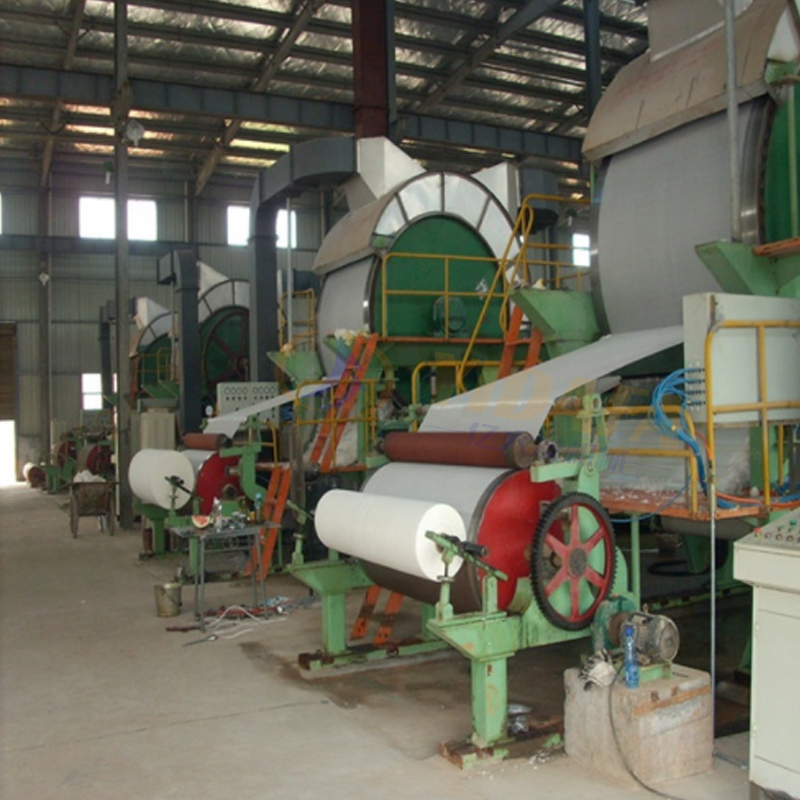
Step 4: Paper Forming. The pulp slurry is evenly distributed onto a moving mesh screen, where water drains away to form a continuous wet sheet. This sheet passes through a series of press rollers that mechanically squeeze out excess moisture, followed by heated cylinders in the drying section that evaporate remaining water . Advanced Yankee dryers combined with smart moisture controls can cut drying energy by 10–12% per ton of tissue.
Step 5: Creping, Embossing, and Converting. The dried paper web is scraped off the dryer cylinder (creping) to create softness and bulk, then embossed for texture and perforated for easy tearing. High-speed precision converting systems ensure consistent thickness, strength, and softness across each roll . Finally, jumbo rolls are rewound, slit, and cut into finished consumer or commercial products.
Step 6: Packaging and Distribution. Finished rolls are packaged—ideally in plastic-free, biodegradable materials—and prepared for shipment to retailers, hospitality businesses, healthcare facilities, and industrial buyers.
End-to-End Solutions: Yidafa’s Bamboo Pulp Production Line
For manufacturers seeking to enter or expand in the bamboo toilet paper market, Qingdao Yidafa International Trade Co., Ltd. offers a complete turnkey solution. The company’s bamboo pulp system toilet paper production line processes raw bamboo chips through an integrated sequence: from the bamboo pulp machine to the parent toilet paper roll making machine, culminating in finished products ready for packaging and distribution.
Key features of the Yidafa production line include:
Complete Integration. The system encompasses everything from bamboo chip processing to finished roll production, eliminating the need for fragmented supplier sourcing.
Scalable Capacity. Designed for both small-scale operations and industrial-level output, with configurations adaptable to varying market demands.
Energy-Efficient Design. Modern drying and pulping technologies minimize power consumption while maximizing throughput.
Versatile Output. Beyond toilet paper, the same machinery can produce facial tissue, napkins, kitchen paper towels, and other household paper products—enabling manufacturers to diversify their product lines.
For more information on Yidafa’s bamboo pulp system toilet paper production lines, visit https://yidafapapermachinery.com/.
Applications Across Sectors
Bamboo toilet paper’s unique combination of sustainability, softness, and strength has opened applications across multiple sectors:
Household Use. Environmentally conscious consumers seeking biodegradable, hypoallergenic alternatives to traditional toilet paper are driving robust retail demand. Bamboo tissue products produce 30% fewer greenhouse gas emissions than those made from 100% virgin forest fiber, a compelling statistic for eco-aware households.
Commercial and Hospitality. Hotels, office buildings, and public restrooms increasingly specify bamboo toilet paper to meet LEED certification requirements and demonstrate corporate sustainability commitments. The material’s naturally antibacterial and hypoallergenic properties make it particularly suitable for healthcare facilities and sensitive environments .
Institutional Procurement. Schools, universities, and government agencies with sustainability procurement mandates are incorporating bamboo-based hygiene products into their supply chains.
Industrial and Specialty Applications. Beyond bathroom tissue, bamboo pulp is used in facial tissue, napkins, paper towels, A4 copy paper, biodegradable tableware, and even filtration products.
Market Outlook
The bamboo pulp market is poised for sustained growth. The global bamboo pulp paper market is projected to reach approximately $15 billion by 2033, growing at a CAGR of 6.5% from 2025 to 2033. Several factors are driving this expansion: tightening regulations on deforestation-linked materials, brand commitments to sustainable sourcing, consumer demand for plastic-free and biodegradable products, and ongoing technological improvements that reduce production costs while enhancing product quality.
A Note on Responsible Sourcing
Not all bamboo products are created equal. Responsible manufacturers should look for FSC (Forest Stewardship Council) certification to ensure sustainable cultivation practices, verify supply chain transparency, and avoid monoculture plantations that can reduce biodiversity. The Cheeky Panda and similar certified B Corp companies demonstrate that bamboo hygiene products can be FSC-certified, plastic-free, and low-carbon—setting a benchmark for the industry.
The Bottom Line
Bamboo toilet paper represents more than a passing trend. It is a practical, scalable solution to one of the paper industry’s most persistent environmental challenges. With the right manufacturing infrastructure—such as the comprehensive solutions offered by Qingdao Yidafa International Trade Co., Ltd.—producers can deliver products that meet consumer expectations for performance while advancing genuine sustainability goals.
For inquiries about bamboo pulp toilet paper production lines, complete manufacturing systems, or technical specifications, visit https://yidafapapermachinery.com/ or contact Qingdao Yidafa International Trade Co., Ltd. directly.

